Hello There,
There's a unique kind of energy that comes from being surrounded by visionaries and dreamers, and that was exactly the vibe during my recent trip to San Francisco for my first Startup Grind Global. Staying in a founder's house with builders was a reminder that the barriers to creating something new are lower than they've ever been.
We are living in a fantastic time where AI is making it easier than ever to build. In fact, experimentation costs appear unusually low today. I've been keeping my own skills sharp, staying up too late in the process, and getting hands-on with these tools has helped me better understand how founders are using them and how they can be applied at scale.
Investing is, in many ways, a bet on the future: your view, your conviction, your willingness to see what others might miss.
Webinar Replay
Missed last month's webinar with Founder & Portfolio Manager Brad Zapp and Stacklist founder Kyle Hudson? Reply to this email and I'll make sure you get the recording.
Data Corner • Chart of the Month
What Pitch Competitions Measure vs. What Research Says Matters
At Connetic, this chart maps directly to how we think about venture diligence. Our process is built around Wendal, our AI analyst, and Foundernomics, our founder-trait research framework built on TeamPrint and Venture Mind Index data captured through Wendal. Instead of treating the pitch as the product, the workflow is designed to study founder traits, team dynamics, timing, terms, technology, and evidence from the business before final human diligence.
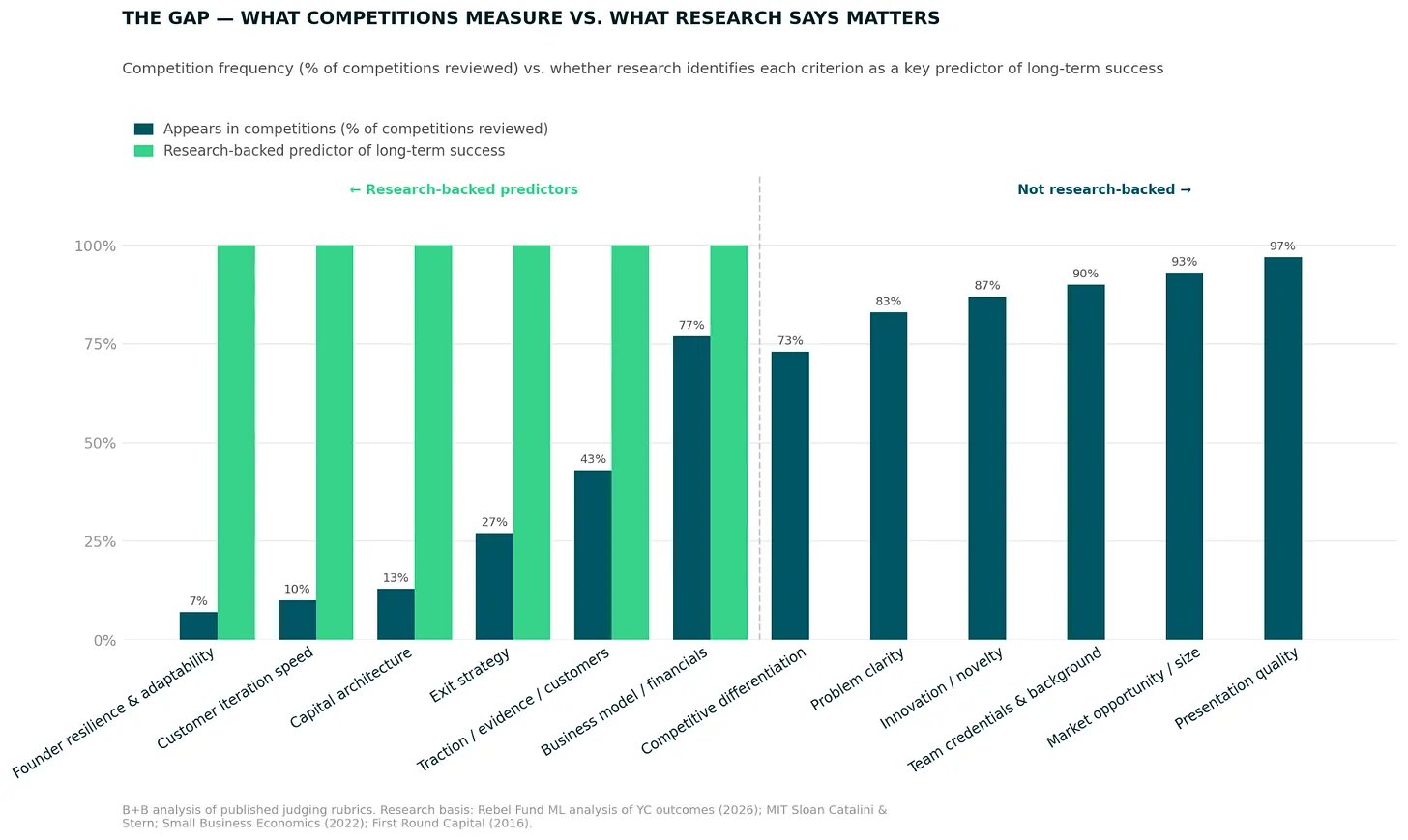
The gap is the point. Pitch competitions often reward what is easiest to see in a room, while Connetic's AI and psychometric-style workflows are built to look for less obvious founder and company signals across a much broader data set. Strong companies are not always the ones that look best on a scorecard.
The same idea carries into this month's main piece: access may get attention, but adoption depends on the infrastructure that helps people actually use what has been built.
Featured Advisor Commentary
From Investor Access to Advisor Adoption
Farther's $150 million Series D, record RIA M&A activity, and recent advisor technology data all point toward the same shift: wealth management is being rebuilt around advisor workflow, technology infrastructure, and client-ready implementation.
The Signal: Capital Is Moving Toward Advisor Infrastructure
The wealth management market is sending a clear signal: the next phase of growth in the RIA channel will not be defined only by how many assets firms gather. It will also be defined by how effectively firms help advisors operate.
That is the larger takeaway from Farther's $150 million Series D, led by General Atlantic. According to Farther's announcement, Farther is a New York-based RIA with a proprietary wealth platform and more than $23 billion in recruited assets, which Farther defines as assets currently under management plus additional assets expected from advisors joining in coming months, since its founding in 2019. Farther's own announcement describes its "Intelligent Wealth Platform" as an all-in-one ecosystem designed to help advisors with asset location, execution, data quality, risk management, personalized insights, AI-driven tools, and access to private markets.
The financing is notable because it reflects a broader market theme: institutional capital is increasingly focused on advisory firms that combine scale with technology-enabled operating leverage. Put differently, the market is not only asking how much AUM a firm can gather. It is asking what kind of advisor operating system sits underneath that AUM.
From AUM Aggregation to Platform Expansion
RIA M&A activity reinforces the same point. According to ECHELON Partners' Q1 2026 RIA M&A Deal Report, the first quarter of 2026 set a new quarterly record with 142 announced RIA transactions and $1.67 trillion in total transacted AUM, more than double the prior-year period. ECHELON also noted that private equity remained involved in over 70% of transactions, while acquirers focused on building integrated capabilities across tax, estate planning, institutional services, AI, client analytics, and compliance.
For years, the RIA consolidation story was largely about asset aggregation: acquire advisors, add client relationships, centralize operations, and build scale. That model still matters. But the market appears to be evolving from a pure consolidation story into a broader infrastructure story.
The premium opportunity is increasingly tied to the ability to give advisors better workflows, better data, stronger service capabilities, and more scalable client experiences. In that sense, the RIA channel is not just becoming larger. It is becoming more platform-driven.
Advisor Tech Is Embedded, but Still Fragmented
That shift matters because the advisor's job is becoming more complex. Clients are asking for broader planning support, tax-aware advice, estate coordination, access to alternative investments, and help making sense of uncertain markets. At the same time, advisors are expected to deliver a seamless digital experience while navigating compliance, reporting, service, and operational demands.
The latest advisor technology data shows both how embedded technology already is and how much room remains for better integration. The 2026 T3 / Inside Information Software Survey collected 2,906 valid responses from advisory firm participants and calculates category market penetration as the percentage of all respondents using at least one solution in a category. In that survey, 91.08% of respondents reported using CRM software, 83.30% reported using financial planning software, and 74.40% reported using portfolio management software. But only 25.82% reported using all-in-one programs.
That is the key distinction. Advisors are not technology-light. Many are already technology-dependent. The issue is that the technology environment remains fragmented.
Fragmentation creates friction. It increases the time spent moving between systems. It complicates onboarding. It makes data harder to organize. It can weaken follow-up, reporting, and client communication. It can also make it harder for advisors to scale without sacrificing personalization.
This is where the next generation of advisor infrastructure becomes important. The most useful technology does not replace the advisor. It removes the drag around the advisor.
AI Is an Operating-Leverage Tool, Not a Replacement
AI adoption is moving in that direction, but the industry is still early. Schwab's 2026 RIA & AI Research Study found that 63% of advisors are using AI, while noting that most firms remain in the experimentation phase and that AI's current impact is most visible in administrative tasks and client communications.
That gap between "using AI tools" and "building an AI-enabled advisory platform" may become one of the defining competitive separations in wealth management.
For advisors, the implication is practical. The next wave of technology should not be evaluated only by novelty. It should be evaluated by whether it improves the advisor's ability to serve clients. Does it make the planning process clearer? Does it reduce operational friction? Does it make client conversations easier to prepare for? Does it help advisors scale without sacrificing personalization? Does it create more time for the human parts of advice that clients value most?
That human layer may become even more important as technology standardizes parts of the investment process. In a May 2026 Advisor Perspectives / VettaFiarticle covering the Goldman Sachs RIA Professional Investor Forum, industry leaders argued that RIA growth remains early and increasingly client-driven. The article cited Dynasty Financial Partners' Shirl Penney, who said roughly $400 billion migrated from banks and brokerages to the independent channel last year, with only about $100 billion moving alongside breakaway advisor teams. The remainder was attributed to organic growth and clients independently seeking fiduciary-based advisors.
That is a meaningful point. The independent channel is not growing only because advisors are leaving legacy institutions. It is also growing because clients are choosing a different advice model.
The Product Lesson: Access Is Not Adoption
For investment products, this changes the strategic requirement.
It is no longer enough for a product to be available to individual investors. Availability does not automatically create adoption. In the RIA channel, adoption happens through advisors, and advisors need more than access.
They need education. They need implementation support. They need portfolio-construction context. They need client-ready explanations. They need materials that help them discuss liquidity, risk, valuation, time horizon, fees, and the role a strategy may play inside a broader financial plan.
This is especially important as private markets and alternative investments become more accessible to individual investors. Greater access can be valuable, but it also creates a translation challenge. Advisors must be able to explain not only what a strategy is, but why it belongs, how it behaves, where it fits, and what tradeoffs clients should understand before allocating.
Firms and products may be better positioned when they are easier for advisors to understand, explain, implement, monitor, and revisit with clients over time. That does not mean simplifying the underlying investment strategy. It means building the right education, communication, reporting, and implementation layer around it.
For fund sponsors, asset managers, and wealth platforms, the lesson is clear: advisors should not be treated as a distribution channel that enters the process after the product is built. They should be understood as the operating layer through which complex financial products become usable, explainable, and relevant to client portfolios.
Key Takeaway
The RIA channel is not just growing; it is becoming more infrastructure-driven. Farther's financing, record RIA M&A activity, rising AI adoption, and advisor technology data all point to the same structural trend: wealth management is becoming more technology-enabled, but the advisor remains the critical translation layer.
For firms building for the RIA channel, one practical takeaway is: access is only the beginning. Advisor adoption is where the real work begins.
Sources
General Atlantic. Farther Raises $150 Million Series D Led by General Atlantic to Scale Intelligent Wealth Management. May 21, 2026. Link
ECHELON Partners. Record-Breaking RIA M&A Activity in the First Quarter of 2026. May 2026. Link
T3 / Inside Information. 2026 Software Survey. March 2026. Link
Charles Schwab. 2026 RIA & AI Research Study: Advisor AI in Action. 2026. Link
Advisor Perspectives / VettaFi. RIA Growth Is Just Getting Started, CEOs Say. May 14, 2026. Link
Private Company Highlight
Company Spotlight: SupportPay
Family finance infrastructure for the real world.

This company is discussed for informational and educational purposes only. The discussion is not a recommendation to buy, sell, or hold any security, and should not be viewed as representative of all Connetic investments or prospective investments.
Founded by CEO Sheri Atwood after living through the financial chaos of co-parenting after divorce, SupportPay is solving a problem hiding in plain sight: the messy, emotional, high-stakes financial layer between households.
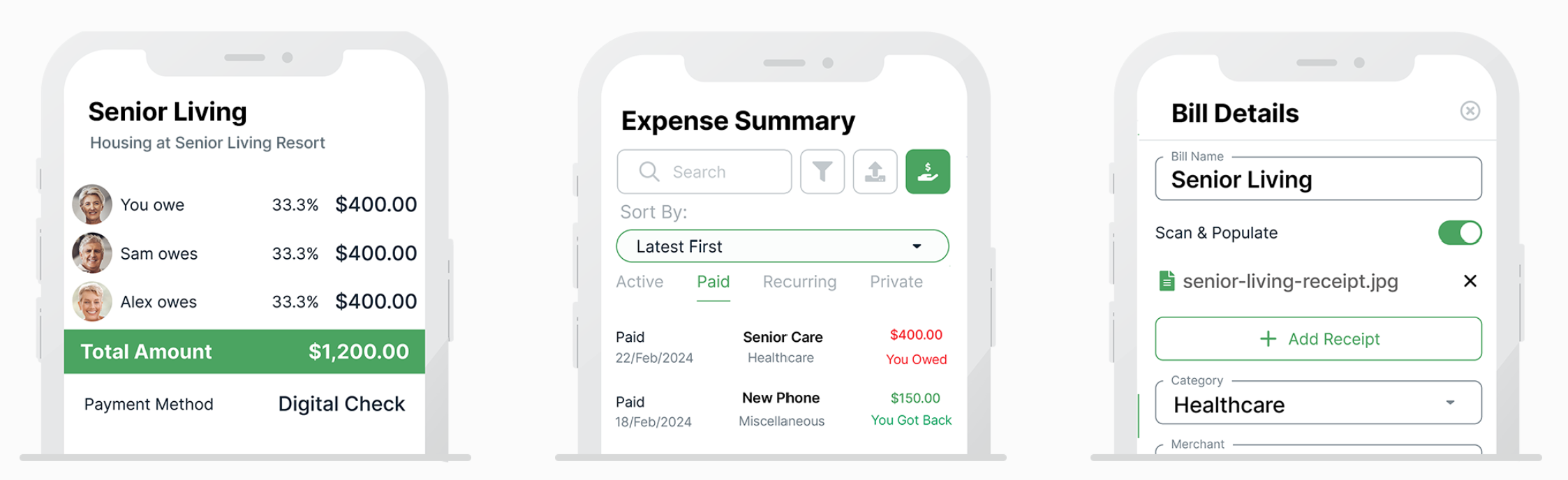
The platform is built for families who need more than a payment app: expense splitting, receipt uploads, document storage, shared calendars, private messaging, payment tracking, and organized records for situations like court, taxes, probate, or power of attorney. SupportPay also states that users can send and receive payments without sharing banking information and, where eligible, report on-time support payments to credit bureaus.
Since launch, SupportPay reports that it has impacted more than 500,000 lives, managed more than $800 million in expenses and payments, reached users across all 50 states and 70 countries, and earned coverage in more than 300 media outlets, including Fortune, The Wall Street Journal, The New York Times, and Inc.
The part we find especially compelling is that SupportPay is no longer just a consumer app for co-parenting. It is expanding into a broader family-finance infrastructure layer, including employee benefits, financial-wellness channels, and advisor-oriented workflows. Elder care, shared expenses, family loans, reimbursements, household obligations — these are not edge cases; they are everyday financial workflows. We believe SupportPay gives advisors a structured way to help clients manage those realities.
Connetic-advised account(s), may hold an investment in this company. The reference to this company is for informational purposes only, does not represent all holdings or all investments selected by Connetic, and should not be considered a recommendation or indication of future performance. Holdings are subject to change.

FOLLOW CONNETIC VENTURES
in
Some statements herein may express future expectations and forward-looking views based on Connetic's current assumptions. Statements about companies, securities, or other financial information represent personal beliefs and viewpoints of Connetic or the respective third party. These statements may involve known and unknown risks and uncertainties, potentially leading to different results than those implied or expressed. All content is subject to change without notice.
The information herein was obtained from various sources. Connetic Ventures does not guarantee the accuracy or completeness of information provided by third parties. The information in this newsletter is given as of the date indicated and believed to be reliable. Connetic Ventures assumes no obligation to update this information, or to advise on further developments relating to it. Connetic Ventures offers investment advisory services and is registered with the U.S. Securities and Exchange Commission ("SEC"). SEC registration does not constitute an endorsement of the advisory firm by the SEC nor does it indicate that the advisory firm has attained a particular level of skill or ability. The oral and written communications of an adviser provide you with information about which you determine to hire or retain an adviser. Form ADV Part 2A & 2B can be obtained by visiting: https://adviserinfo.sec.gov and search for our firm name.
Connetic RIA, LLC | 910 Madison Ave. | Covington, KY 41011
© 2026 Connetic RIA, LLC. You received this email because you subscribed to The Connetic Signal.